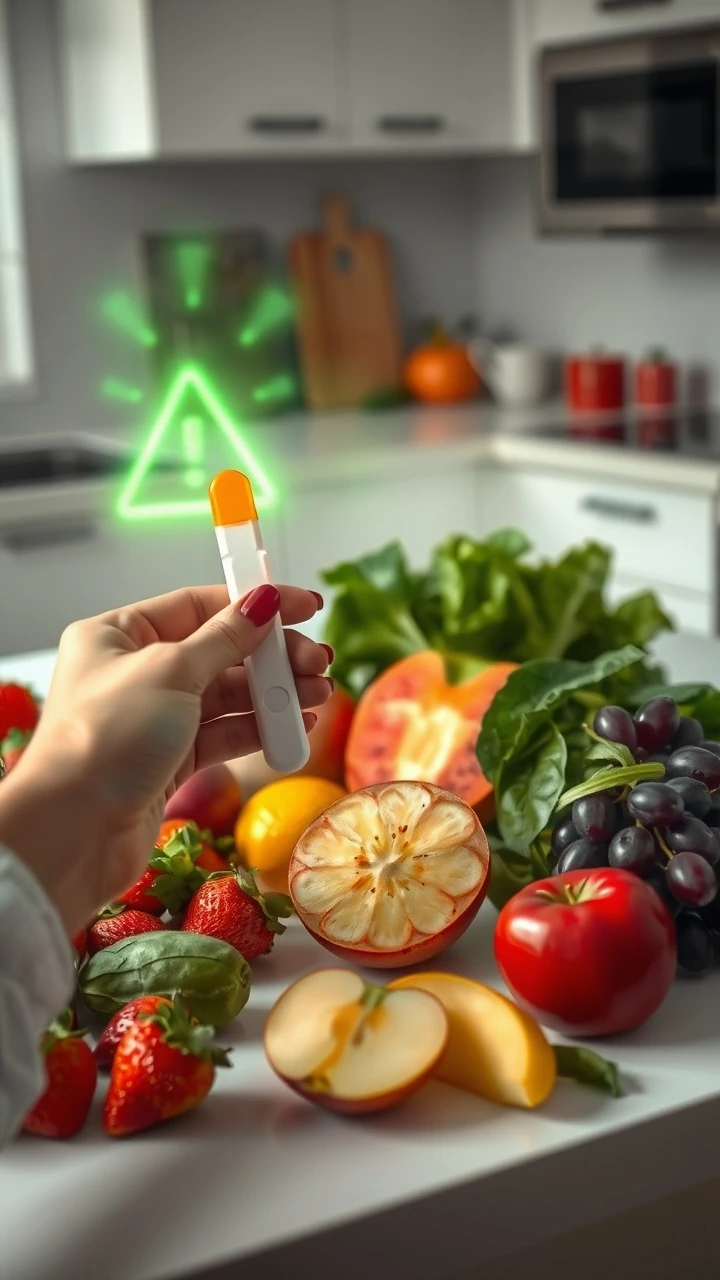
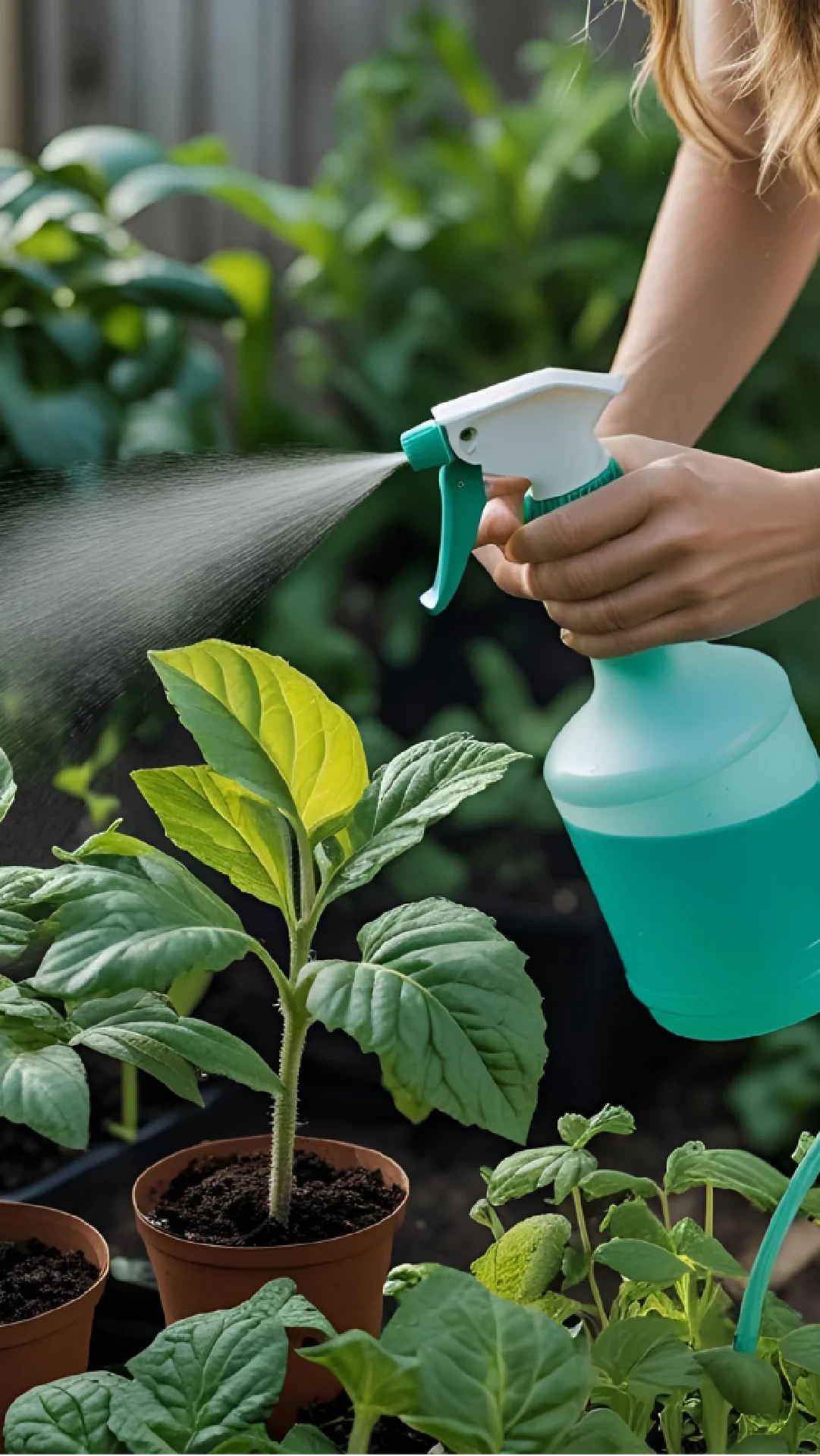
For this reason, cleaning fruits and vegetables should not be limited to removing soil alone — it is also important to eliminate chemical residues. What consumers can realistically do at home includes thorough washing and rinsing, peeling when appropriate, and, if possible, obtaining reliable analysis (pesticide testing) to gain general information about the product and its source.
Studies suggest that sodium bicarbonate (baking soda) may be one of the most effective methods for removing pesticide residues from fruits and vegetables. Compared to washing with vinegar, plain water, or brushing alone, baking soda provides a more effective chemical decontamination. However, whether it truly deserves the “miracle cleaner” label often seen online remains questionable.
Why Baking Soda — How Effective Is It?
Scientific Basis / Mechanism
A study conducted in 2017 by the University of Massachusetts Amherst tested two commonly used pesticides — Thiabendazole (a fungicide) and Phosmet (an insecticide) — applied to the surface of apples. A cleaning solution containing 10 mg/mL (approximately 1%) sodium bicarbonate was used. After soaking for 12–15 minutes and rinsing with water, the majority of pesticide residues on the fruit surface were effectively removed. This result was significantly more successful than washing with tap water or bleach.
The researchers explained this effect as a combination of chemical degradation of pesticide molecules by alkaline pH (alkaline hydrolysis) and the subsequent ease with which residues are physically removed through rinsing and gentle abrasion.
Practical Application / How to Use at Home
The general recommendation is to soak fruits or vegetables in a solution prepared with 1 teaspoon of baking soda and approximately 2 cups of water for 12–15 minutes. After soaking, the produce should be thoroughly rinsed under cold running water and, if necessary, gently scrubbed with a soft brush.
This method has been shown to be particularly effective for pesticides remaining on the surface of produce.
Limitations & Warnings
In the same study, researchers found that 24 hours after pesticide application, some pesticide molecules had penetrated beneath the fruit’s surface. Approximately 20% of Thiabendazole and 4.4% of Phosmet migrated into the apple peel. These internally absorbed residues could not be removed by washing with baking soda solution.
In other words, baking soda is highly effective at removing surface residues, but it may not be sufficient for pesticides that have penetrated deeper into plant tissue.
Additionally, not all pesticides behave in the same way — lipophilic (fat-soluble), systemic, and surface-active pesticides differ in their chemical properties. Therefore, the claim that “baking soda removes all pesticides” is not scientifically accurate.
In conclusion, baking soda is a highly effective and reasonable household cleaning method, but it cannot guarantee complete removal of all pesticide residues.
Some sources indicate that vinegar, due to its acidic nature, may help reduce microbial load and assist in removing certain surface residues.
However, comparative scientific studies (including the apple study mentioned above) have shown that vinegar or bleach washing is less effective than baking soda in reducing pesticide residues.
Why Absolute Claims Such as “Baking Soda Removes Everything” or
“No Nutrient Loss Occurs” Can Be Misleading
Slogan-style claims frequently found online — such as “98% of pesticides are destroyed in 2 minutes,” “baking soda is effective against all pesticide types,” or “there is no nutrient loss or peel damage” — are scientifically incomplete and often misleading interpretations.
What is supported by evidence:
- Baking soda can significantly reduce surface pesticide residues.
- Its effectiveness is limited for pesticides that penetrate deeper into tissues.
- Removal efficiency varies by pesticide type.
- Long-term, controlled studies on nutrient loss or peel damage are limited; therefore, numerical claims such as “95% of vitamins are preserved” are not reliable. More cautious phrasing — such as suitability for firm or thick-skinned produce — is scientifically more appropriate.
Using combined and multi-step cleaning techniques provides better overall results. Additionally, thorough rinsing after each step plays a critical role in overall effectiveness. For further details, you may consult our article titled “Protecting Yourself from Pesticide Residues.”
References
Yang T., Doherty J., Zhao B., Kinchla A.J., Clark J.M., He L. Effectiveness of Commercial and Homemade Washing Agents in Removing Pesticide Residues on and in Apples. Journal of Agricultural and Food Chemistry, 2017.
“Baking Soda Washes Pesticides from Apples” — ACS Axial / C&EN, 2017.
“Food Washing Methods to Remove Pesticides” — Pesticides.org (general information).